How to Choose the Right Stretcher: A Complete Guide to Materials, Weight Capacity, and Usage Scenarios
Selecting the appropriate stretcher for emergency teams, medical institutions, or rescue departments is a decision that concerns life safety, operational efficiency, and long-term investment. With a vast array of models on the market, how do you accurately match your needs? This guide will focus on the three core dimensions of material, weight capacity, and usage scenarios to provide you with a clear, professional selection framework and explain the characteristics of mainstream stretcher types to help you make an informed choice.
I. Core Decision Factor One: Material – Balancing Strength, Weight, and Cost
The material of a stretcher directly affects its weight, durability, maintenance cost, and suitability for different environments.
-
High-Quality Aluminum Alloy
-
Characteristics: The mainstream material for high-end stretchers today. Notable for its high strength-to-weight ratio, lightweight, corrosion resistance, and rust resistance.
-
Advantages: Significantly reduces the physical strain on rescuers, improving transport efficiency; the surface is anodized, making it durable and easy to clean/disinfect. Ideal for situations requiring frequent use and rapid transfer, such as ambulances and hospital emergency departments.
-
Representative Types: Our Ambulance Stretchers, Scoop Stretchers, Stair Chair Stretchers, Folding Stretchers, and Basket Stretchers are all constructed from high-quality aluminum alloy, ensuring excellent structural stability while remaining lightweight.
-
-
High-Strength Steel
-
Characteristics: A traditional and robust material offering exceptional rigidity and load-bearing capacity.
-
Advantages: Often more cost-competitive and extremely structurally solid. Suitable for applications requiring extreme durability or where budget is a primary concern. The drawback is a heavier weight.
-
Representative Types: Some Ambulance Stretchers and Basket Stretchers may also utilize steel or a steel-aluminum combination to withstand high-intensity use.
-
-
Engineering Plastics/Composites
-
Characteristics: Insulating, lightweight, buoyant, and easily molded.
-
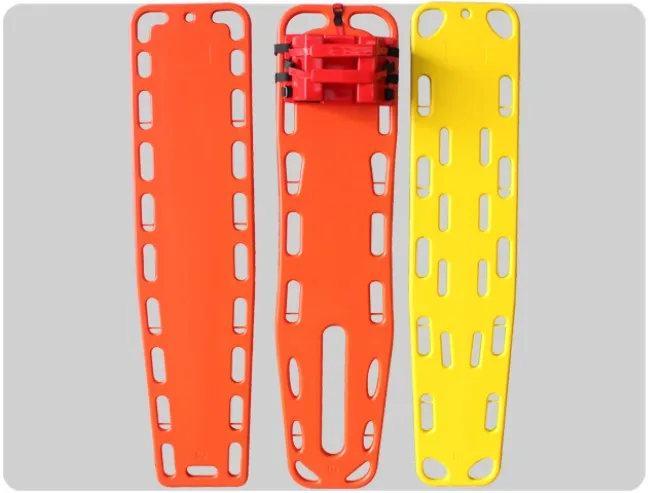
Advantages: Suitable for specialized rescue scenarios. For example, plastic spine boards offer good X-ray translucency; floating stretchers are used for water rescues; roll-up soft stretchers are extremely lightweight, ideal for confined spaces or remote hiking.
-
Representative Types: Our Spine Boards, Roll-up Stretchers, Soft Stretchers, and Floating Stretchers are primarily made from high-strength plastics or composite materials to meet special rescue needs.
-
Key Note: Regardless of the material, all our stretcher products undergo rigorous testing with a minimum weight capacity of 160 kg (approximately 350 lbs), ensuring safe transport for the vast majority of patients.
II. Core Decision Factor Two: Usage Scenarios – The Key to Matching the Task
The primary principle for choosing a stretcher is: "In what environment, by whom, and for transporting what type of patient will it be used?"
-
Pre-hospital Emergency Care & Ambulance Transport
-
Scenario Needs: Speed, stability, integration with ambulance equipment, easy loading/unloading.
-
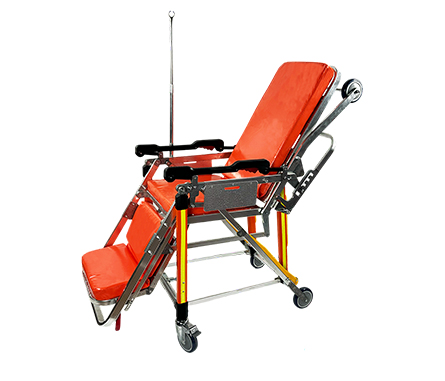
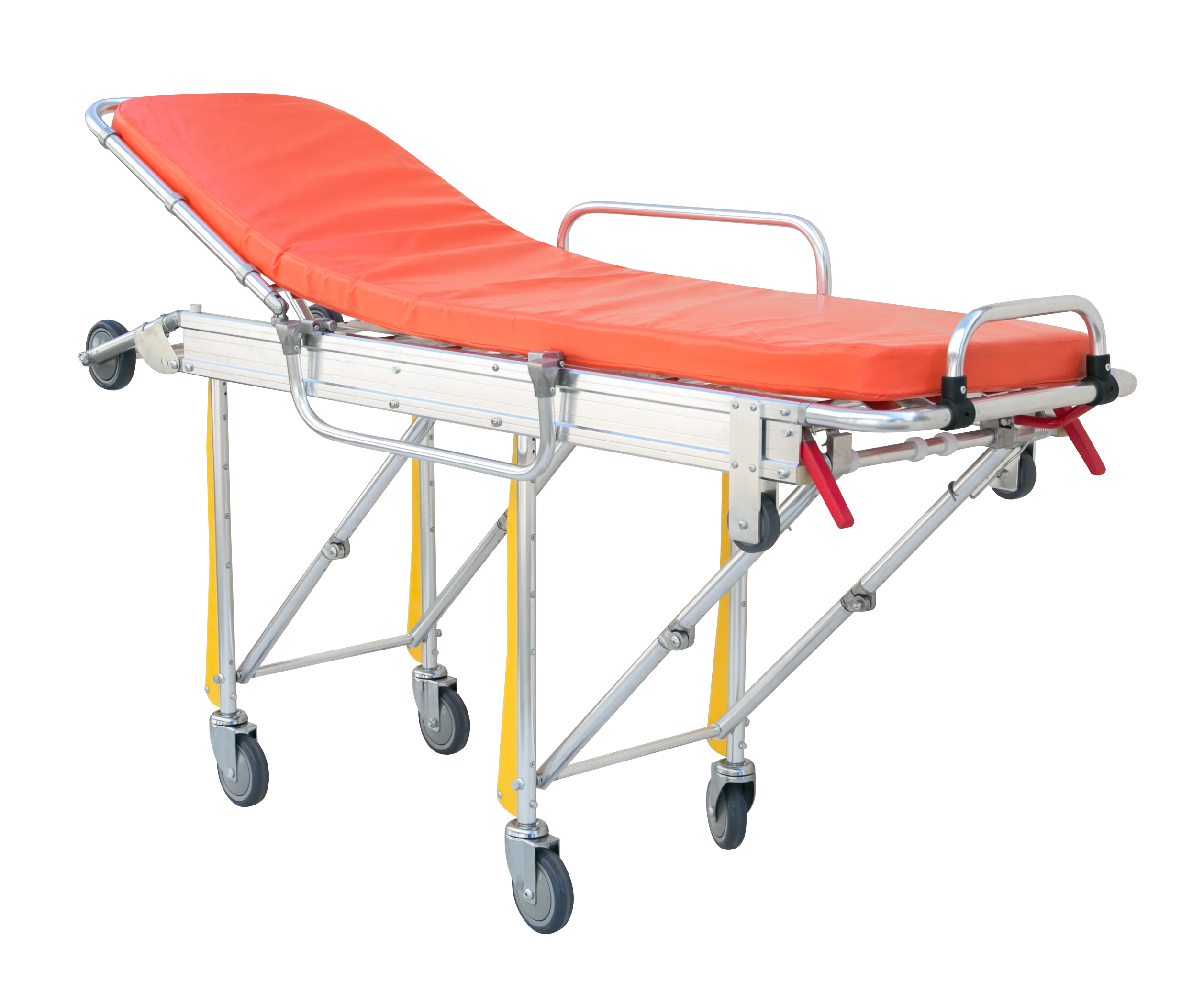
Recommended Type: Ambulance Stretcher (Wheeled Stretcher). The core of ambulance systems, featuring adjustable height, foldable rails, central braking systems, and wheels compatible with ambulance locking mechanisms.
-
-
-
Suspected Spinal Injury Field Rescue
-
Scenario Needs: Minimize patient movement, maintain full spinal immobilization.
-
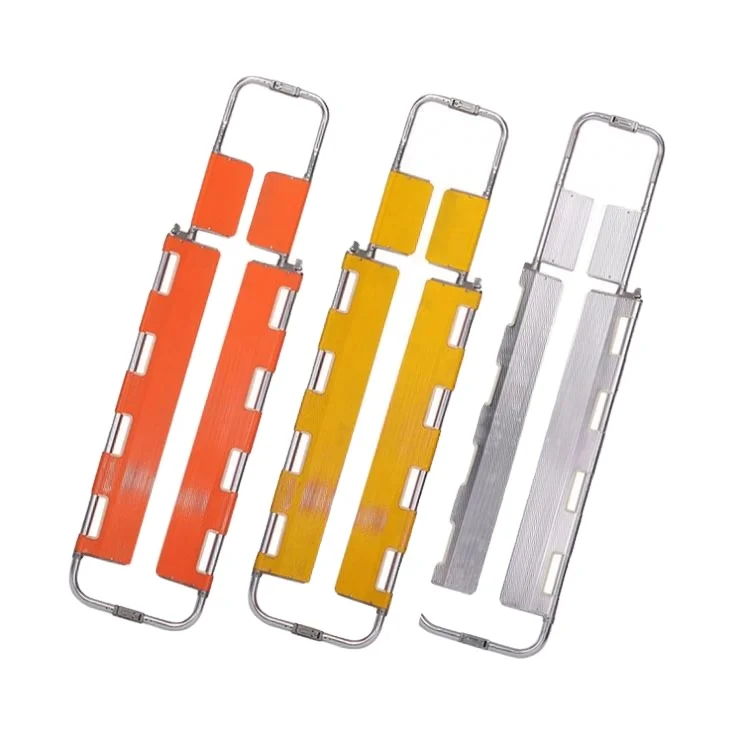
Recommended Type: Scoop Stretcher used in combination with a Spine Board. The scoop stretcher can be separated laterally to "scoop" the patient from underneath and reassemble without rolling the patient, making it the gold standard for spinal immobilization and movement.
-
-
-
Confined Space & Staircase Evacuation
-
Scenario Needs: Safe patient transfer in stairwells, elevators, narrow residences, and other restricted spaces.
-
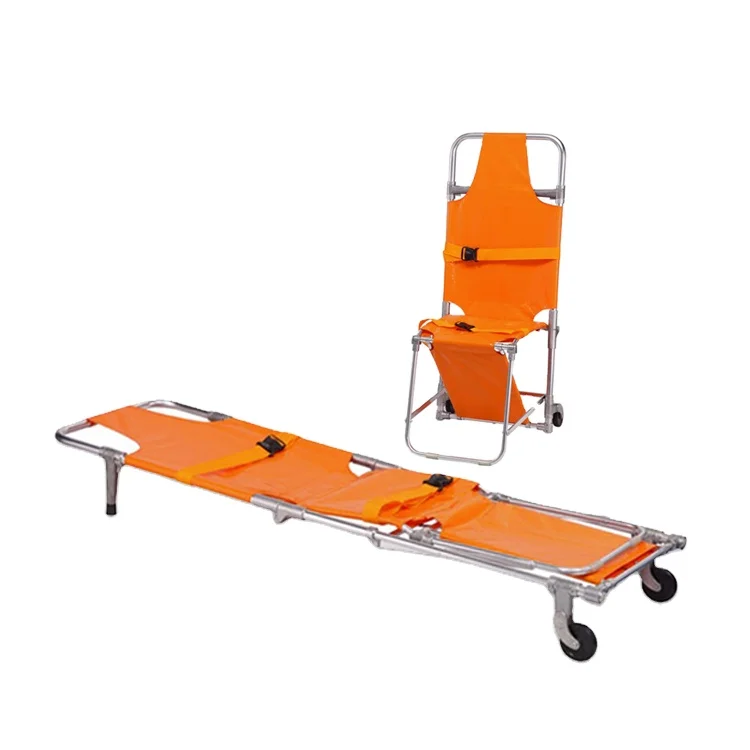
Recommended Type: Stair Chair Stretcher. This combines stretcher and chair functions, allowing for stable patient transport down stairs in an upright seated position, significantly solving the challenge of moving patients on staircases with traditional stretchers.
-
-
-
Wilderness, Disaster & Mass Preparedness
-
Scenario Needs: Easy bulk storage, rapid deployment, lightweight carrying, adaptable to complex terrain.
-
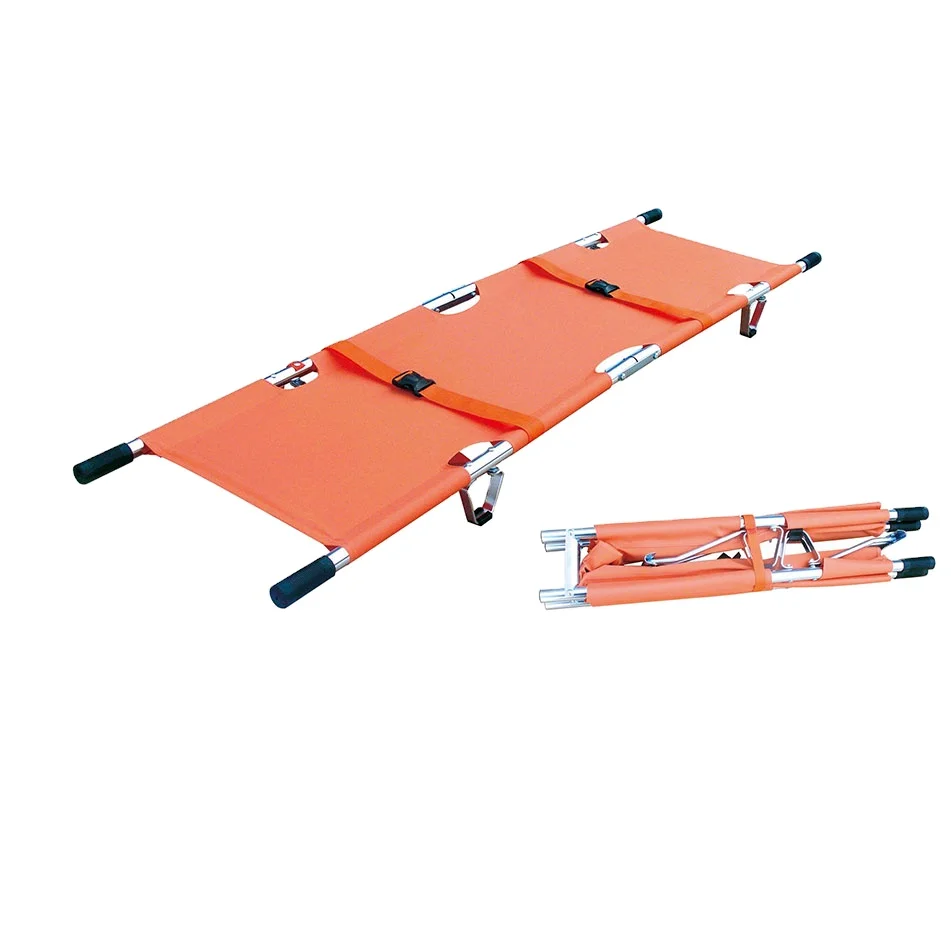
Recommended Type: Folding Stretcher. Its frame is collapsible with a canvas bed, making it extremely lightweight. It is standard equipment for fire departments, wilderness rescue teams, and disaster preparedness warehouses.
-
-
-
High-Angle, Water & Specialized Rescue
-
Scenario Needs: Addressing special environments like falls, water, chemical contamination.
-
Recommended Types:
-
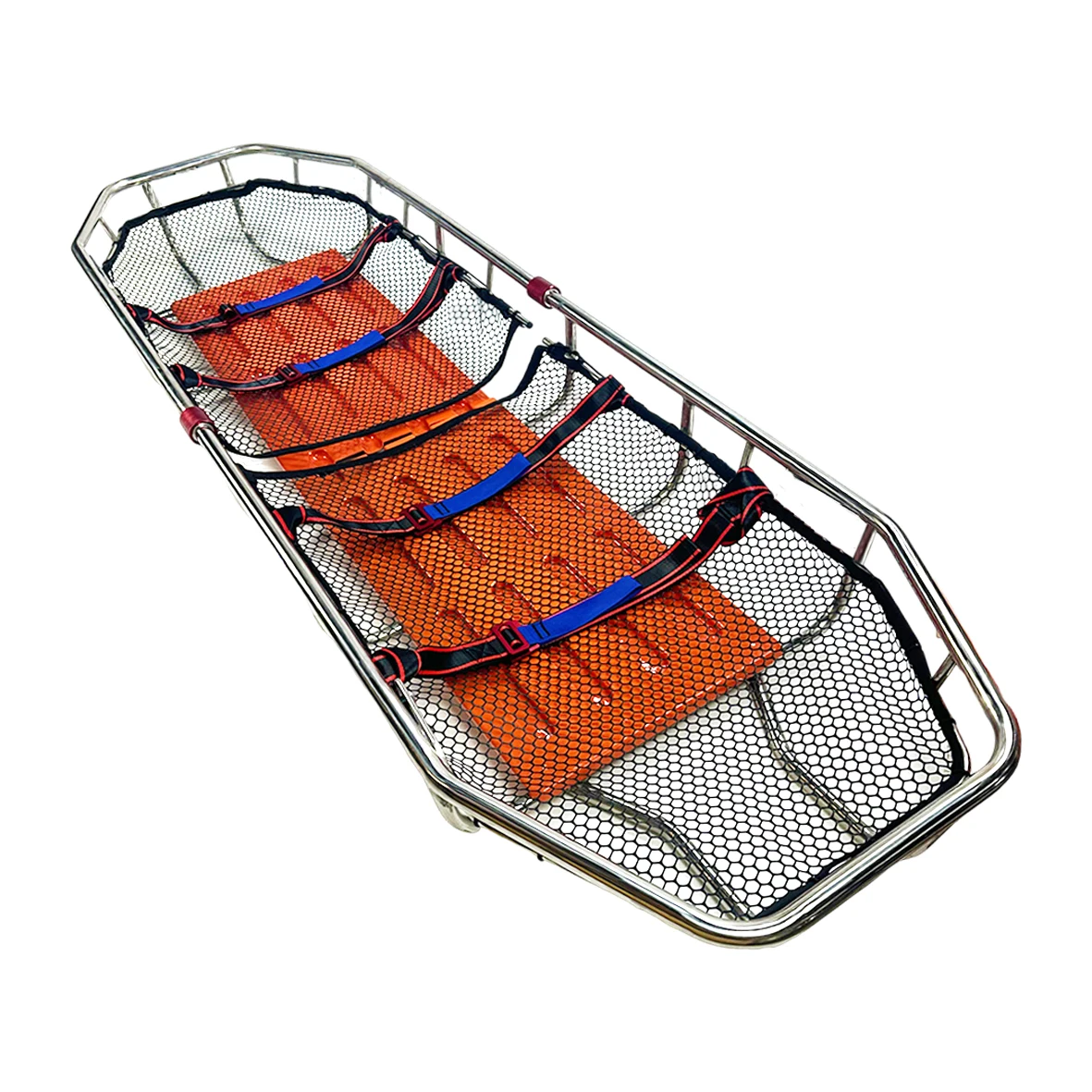
Basket Stretcher (Rescue Litter): Constructed from aluminum alloy or steel in a rigid basket-like structure, providing full-body protection for the patient. Particularly suitable for high-angle cliff rescues, helicopter hoisting, or casualty transport in contaminated areas.
-
-
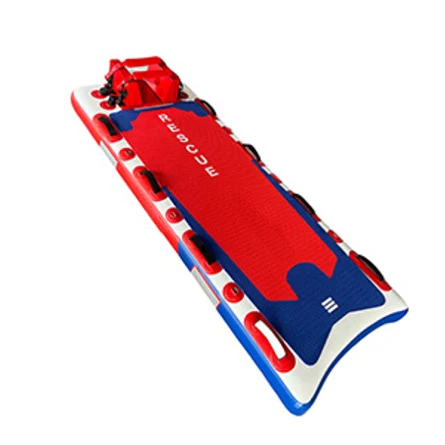
Floating Stretcher: Designed specifically for water rescue, providing buoyancy to quickly retrieve a casualty from the water.
-
Roll-up Stretcher / Soft Stretcher: Essentially a sturdy mat with handles that can be rolled up for storage. Used for horizontally dragging a casualty through extremely tight spaces (e.g., pipes, engine rooms).
-
-

III. Final Recommendations
-
For Comprehensive Rescue Units (e.g., Fire, General Emergency Teams): A combination of Ambulance Stretcher + Scoop Stretcher + Folding Stretcher is recommended to cover most urban and wilderness rescue scenarios.
-
For Hospitals & Emergency Centers: Focus investment on high-performance Ambulance Stretchers and Scoop Stretchers, and equip Stair Chair Stretchers to handle special topography within facilities.
-
For Specialized Rescue Teams (e.g., Mountain, Water): Basket Stretchers, Floating Stretchers, and Roll-up Stretchers are essential tools that must be equipped based on specific mission profiles.
About Us
As a professional medical device international supplier, we offer a full range of stretcher products that meet international standards. From lightweight and sturdy aluminum alloy stretchers to specialized rescue plastic stretchers, each model is built to a safety benchmark exceeding 160 kg, committed to providing reliable life-transport tools for global rescue forces. Please contact us for detailed product catalogs, certification documents, and customized procurement solutions.
Two Professional First Aid Kits: Safeguarding Life in Different Scenarios
2025 New Launch | RC-ES2 Basket Stretcher: The "Safety Capsule" for Life Transportation in Complex Rescue Scenarios